


For most of my adult life I thought I was a clean person. I washed my hands, wiped down the kitchen counters, and kept a microfiber cloth in my bag for one specific job: my glasses. Every morning I would breathe on the lenses, polish them until they were streak-free, and feel like I had done my part. I never once thought about the frames. Why would I? They did not look dirty, and I assumed the parts I could see clearly were the parts that mattered.
The habit I thought was enough
The routine was automatic. Smudge appears, wipe the lens, put the glasses back on. I probably touched my glasses, adjusted them, or took them off and set them down somewhere dozens of times a day without giving it a thought. They went on my nightstand at night, on the gym bag after a workout, on the passenger seat in the car, and onto the edge of whatever desk I was working at.
Looking back, I can see the obvious thing I was missing. The lenses were the only part I cleaned because the lenses were the only part that ever looked dirty. The nose pads, the arms, the little tips that curl behind my ears, those were in constant contact with my skin, my hair, my hands, and the world, and I had not cleaned any of it in years.
What a swab actually found
Then I came across a study from 2018 that did something I had never thought to do. Researchers swabbed 21 pairs of everyday glasses, half from university students and half from people living in a nursing home, and cultured what they found. The answer stopped me. Every single pair was carrying bacteria, all 21 with no exceptions. And the heaviest loads were not on the lenses, which everyone wipes constantly. They were on the nose pads and the ear pieces, the exact spots I never touched with a cloth.
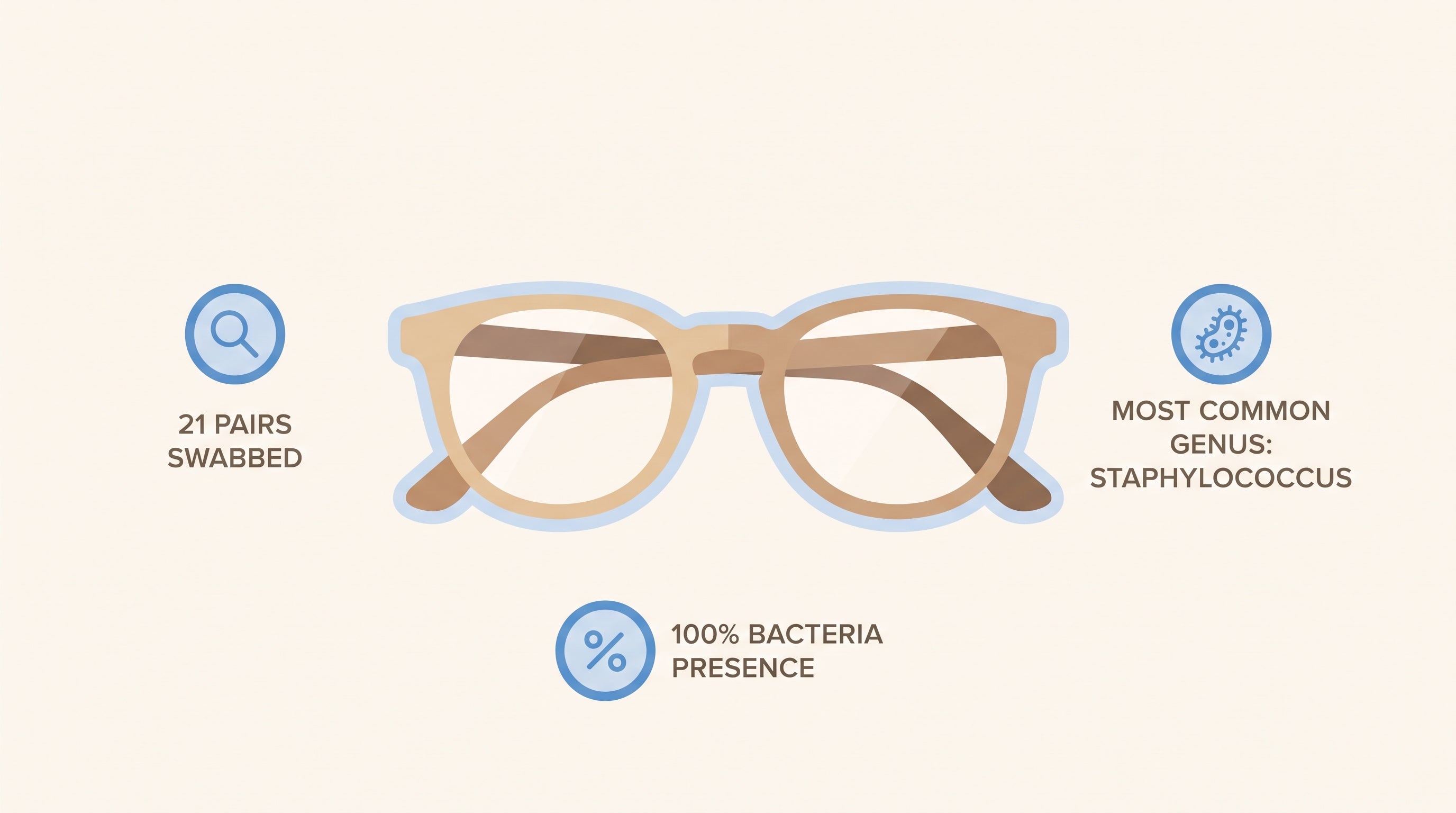
The most common bacteria was Staphylococcus, the same genus that includes Staphylococcus aureus, a species that can cause skin and wound infections. The study's authors found that 60 percent of the isolates from the student glasses, and 64 percent from the nursing home glasses, fell into a category classed as potentially pathogenic. My clean-looking glasses, the ones I polished every single morning, were carrying all of that on the parts I ignored.
I do not say any of this to be alarming. I say it because it changed the way I thought about a very ordinary object. Glasses are not dirty in some dramatic way. They are just personal items that sit against your skin all day, and like any personal item that sits against your skin, they need the whole thing cleaned, not just the shiny part.
The part my cloth never reached
The same study tested how well different cleaning methods actually work, and the result explained why my streak-free routine was never as thorough as it felt. Pre-moistened lens wipes removed 99 to 100 percent of the bacteria in the test. A dry microfiber cloth or a tissue managed only 85 to 90 percent. My daily cloth was doing a fine job on fingerprints and a mediocre job on germs, and it was doing nothing at all for the nose pads and temple tips I never touched.
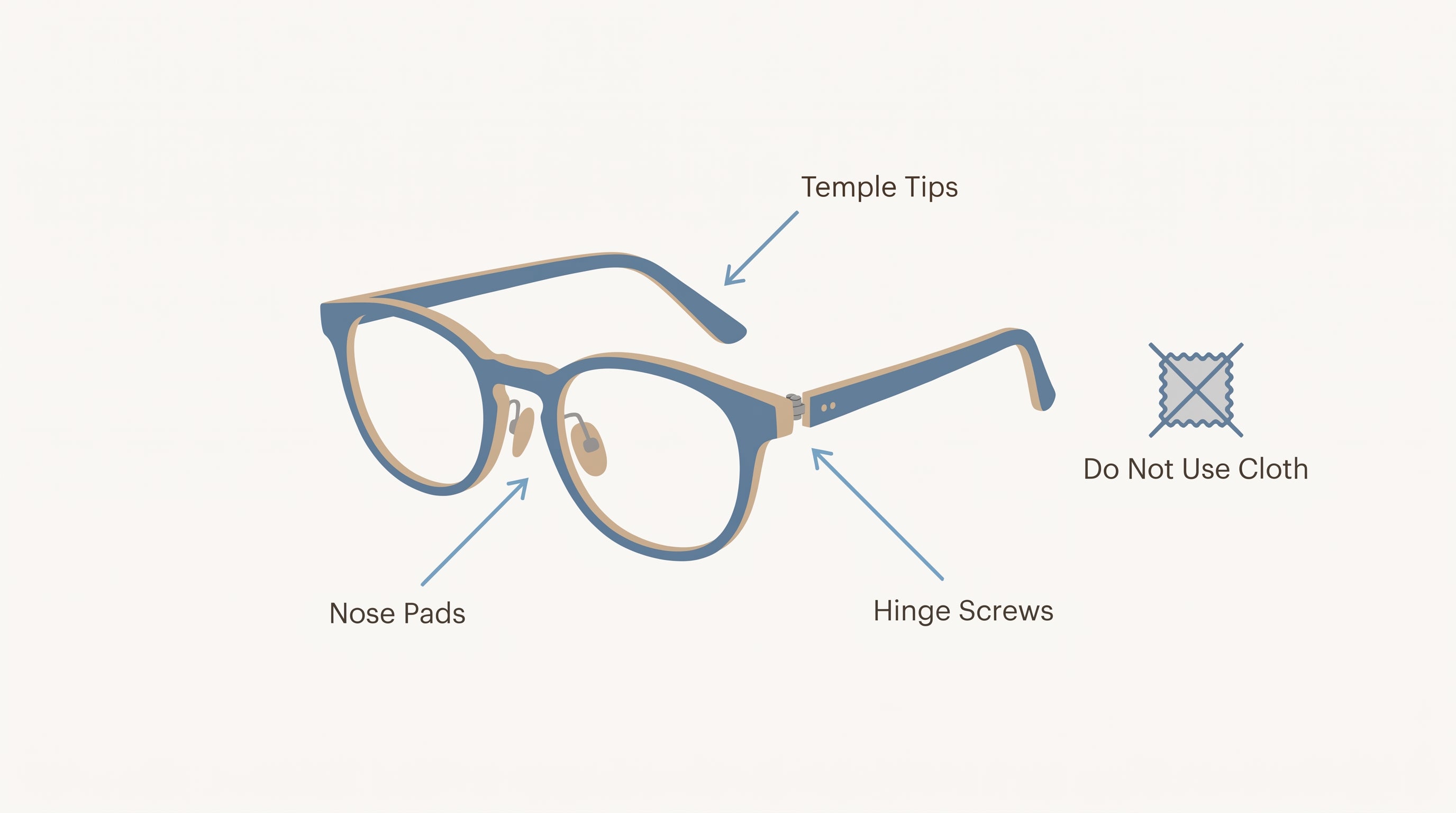
There was a second problem, and it was about reach. Even when I started wiping the frames with a wipe, there were places a flat cloth simply could not get into: the seam around a nose pad, the hinge where the arm folds, the little groove where a temple tip meets the skin. A wipe works on the surfaces it can press against. The nooks stayed nooks.
For the seams and corners a cloth cannot press into, I wanted a tool that reaches them a different way: See the UVCeed disinfection device.
A different way to see it
That is when I started paying attention to UV-C. The idea is simple enough to trust. Ultraviolet-C light damages the DNA and RNA inside bacteria and viruses, which stops them from multiplying. The Food and Drug Administration calls UV-C a known disinfectant for air, water, and nonporous surfaces. The catch is equally simple: UV-C is line-of-sight, so it only treats the surfaces the light can actually reach. Hold it over one side of a pair of glasses and the shadowed side gets skipped. That is not a flaw in the technology; it is just how light works.
What I liked about UVCeed specifically is that it removes the guesswork from that limitation. It works through the phone, and the companion app uses the camera to show you, in real time, which parts of an object have been covered and which still need a pass. You can see exactly where the light has been, so the shadowed spots do not get missed by assumption. In its lab testing, UVCeed inactivated Staphylococcus aureus by 99.9 percent in 15 seconds, a species the same study detected on everyday glasses.
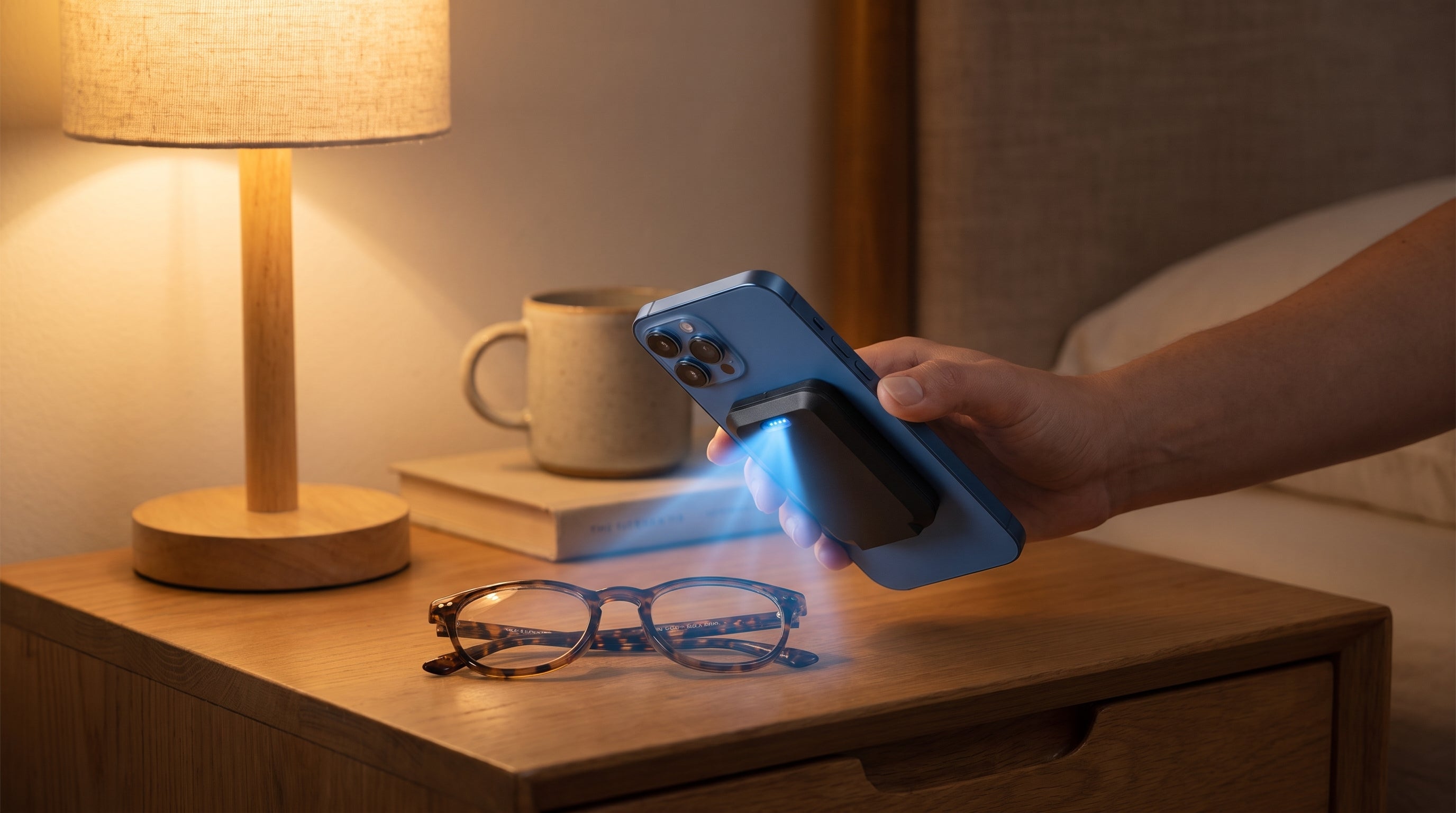
AI-generated illustration for visualization purposes. UV-C light is invisible to the human eye.
I am not a germophobe, and this is not about turning a bathroom counter into a lab. It is about the gap between what looks clean and what is clean, and there is something quietly satisfying about being able to see the difference instead of just trusting it.
If you would rather watch the coverage fill in than trust a blind pass, UVCeed is built for exactly that: See how UVCeed works.
The routine I kept
In the end, I did not overhaul my life. I kept the morning habit and made it slightly wider. I rinse my glasses, clean the lenses and the full length of the arms with a little gentle soap, and dry them with a clean cloth. A few times a week, and whenever someone in the house has been sick, I add one more step: a UV-C pass over the whole pair, frames, nose pads, and hinges, watching the app until the coverage fills in.
It takes a few seconds longer than my old routine and it covers the object I wear on my face for sixteen hours a day. The streak-free lens was never really the point. It was just the part I could see.
Want More Articles Like This?
Get research on UV-C treatment and product updates delivered to your inbox.


