


I always thought of myself as the careful one in the kitchen. I rinse the cutting board between jobs, I wash my hands before I cook, and I scrub my sponge with soap and hot water after every single load of dishes. Every single day. So when I read a study about what actually lives inside a used kitchen sponge, my first reaction was that it did not apply to me. My sponge was clean. I had just washed it. Then I kept reading, and I realized the study was describing my sponge exactly. The one I was so proud of keeping.
What I was actually washing
The study, published in Scientific Reports, looked at used kitchen sponges under a microscope and measured what was inside them. A single cubic centimeter of sponge, a piece no bigger than a sugar cube, held up to 54 billion bacterial cells. I had to read that number twice. The researchers said the density was comparable to what you would find in human stool. The bacteria were not sitting on the surface where my soap could reach them. They were packed into the internal cavities of the sponge, in biofilm-like clusters.
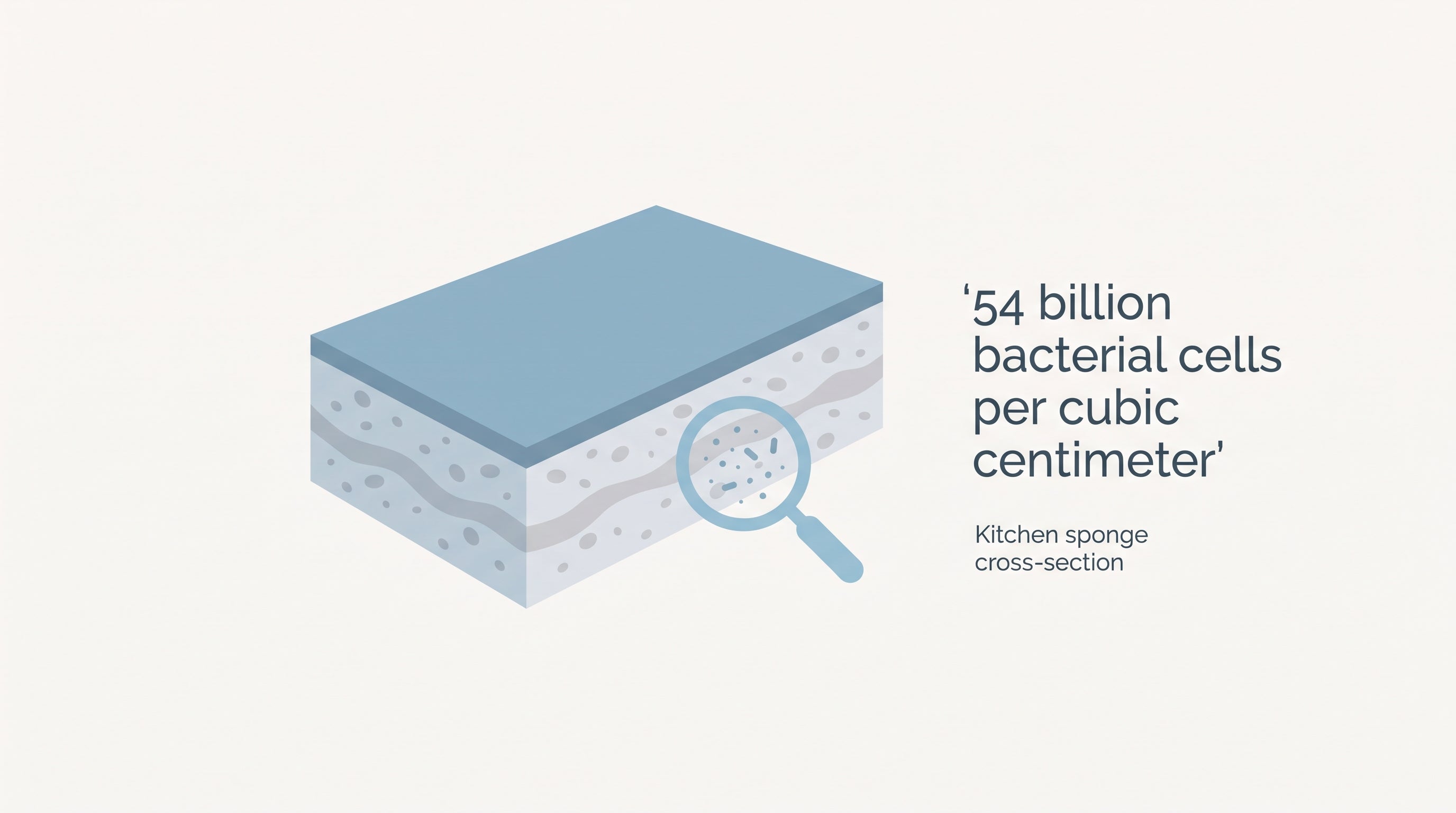
That was the moment the picture changed for me. I had been washing the outside of a wet, porous object that was carrying most of its load on the inside. The soap and water were real, and they helped, but they could not get into the cavities. The sponge was not dirty because I was lazy. It was dirty because a sponge is a warm, wet, food-filled pocket that bacteria are extremely good at colonizing.
The part that made me change my mind
The study tested something else too, and this is where my daily washing habit lost its halo. Sponges that people regularly microwaved or boiled did not come out cleaner in the ways that mattered. Two potentially harmful groups of bacteria actually appeared in greater proportions in the sponges that had been sanitized. The explanation made uncomfortable sense: a hard cleaning knocks back the crowd, and the survivors grow right back into the freed-up space.
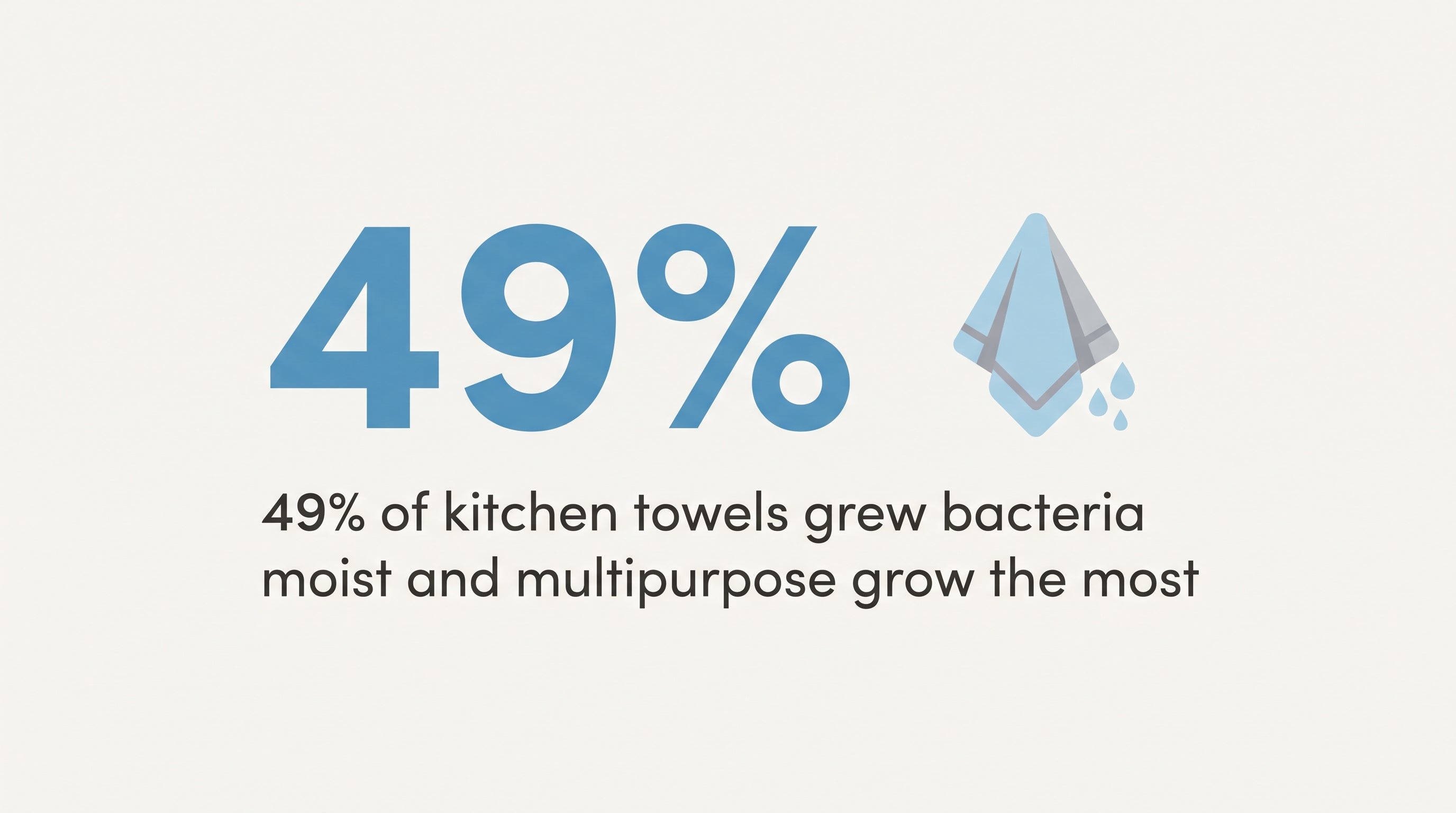
I saw the same story when I looked at the dish towel hanging on my oven handle. A separate study of 100 kitchen towels found that nearly half, 49 percent, showed bacterial growth, and the towels that stayed moist or did multiple jobs grew the most. My towel was doing all of it, drying hands, wiping counters, grabbing a pan, and staying damp for hours at a time. I was not sloppy. I was just using the wrong tool in the wrong conditions, the way a lot of careful people do.
What I changed, and what I did not
None of this sent me into a spiral. I did not throw everything away and start over. I made three small changes that took about five minutes total. First, I stopped trying to make one sponge last forever. I replace it every week, which is what the researchers actually recommended. Second, I gave the dish towel one job and let it dry flat between uses, and it goes into the wash every other day. Third, I started using two cutting boards, one for raw meat and one for produce, the way the FDA suggests, and I stopped cutting on a board that had deep grooves.
The key word here is none of this is an attack on soap and water. Washing is still the foundation, and it always will be. The sponge still gets rinsed and squeezed dry after every use. The difference is that I stopped asking a wet, porous sponge to be something it can never be: a permanently sterile surface.
The hard surfaces I handle differently now
That is where a small UV-C device entered the routine. UV-C light works by damaging the DNA and RNA of bacteria and viruses so they cannot reproduce, but it only works on the surface it can directly see. That is exactly why I do not point it at a sponge and expect it to reach the inside. I point it at the hard, dry, high-touch surfaces around the sink, the ones I was never quite sure I had actually cleaned: the cutting board after it has been washed and dried, the faucet handle, the sink rim, the knife handles, the refrigerator door, and the phone I check recipes on mid-cook.
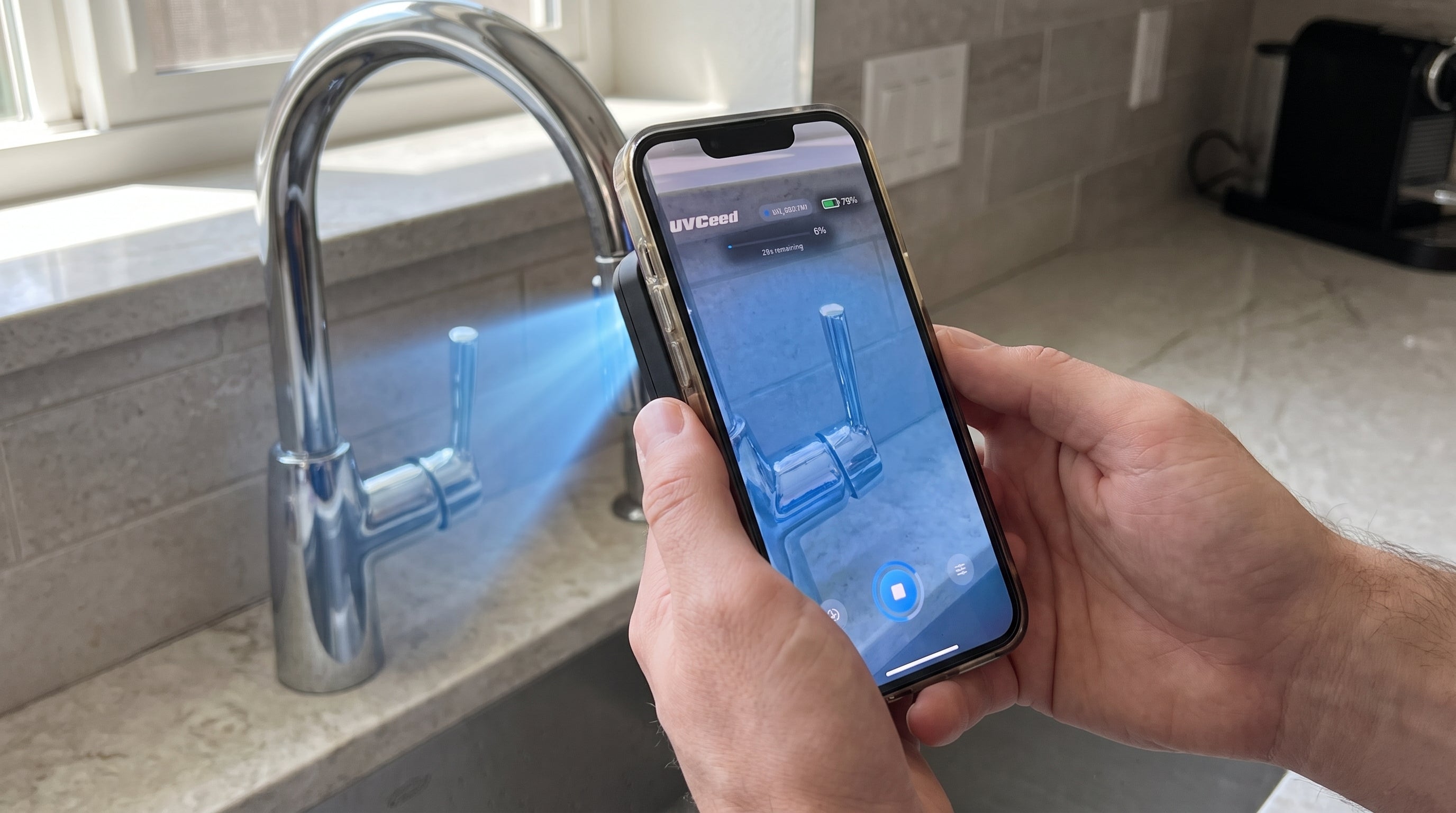
In UVCeed's published lab testing, the device reduced Staphylococcus aureus by 99.9 percent in 15 seconds, E. coli by 99.99 percent in 24 seconds, and SARS-CoV-2 by 99.9 percent in 32 seconds on clean, directly exposed surfaces. What sold me was not the numbers by themselves. It was the app. The camera shows the surface on screen with a coverage overlay, so I can see what I have already treated instead of waving a light around and hoping. After years of guessing whether I got the whole handle or just the front of it, watching the coverage fill in was the first time kitchen cleaning felt like something I could actually verify.
If you have ever finished wiping down the kitchen and still wondered whether the handles and the board were actually clean, this is the piece that closes that gap: https://uvceed.com/products/the-uvceed-disinfection-device.
The routine that finally feels finished
My kitchen routine is not heroic, and that is the point. Once a week I swap the sponge. Every other day I wash the towel and let it dry flat. I use two boards and retire the grooved one. Then, after the normal wash-up, I take about a minute with the UV-C device on the hard surfaces around the sink, and I watch the coverage fill in on screen. The wet things get cycled out. The dry things get covered. Nothing about it feels like a chore anymore, because I finally stopped trying to clean the things that should be replaced and started actually cleaning the things that stay.
The moment I stopped trusting that a wet sponge was clean because I had just washed it was the moment my kitchen actually got cleaner. See the device that closed that gap for me: https://uvceed.com/products/the-uvceed-disinfection-device.
Want More Articles Like This?
Get research on UV-C treatment and product updates delivered to your inbox.


