


The phone was the one thing I actually cleaned
I am the kind of person who wipes their phone down at the end of the day. I wash my hands when I get home. I keep a small disinfecting routine for the kitchen counters, and I genuinely thought I had the high-touch stuff handled.
Then a friend of mine, the kind who swabs household objects for fun, handed me an at-home test kit and asked me to guess which was dirtier: my phone screen or my keys. I laughed, because the answer felt obvious. The phone goes to my face. The phone sits on every cafe table and train seat. My keys just sit in my pocket.
I was wrong about all of it, and the result changed the way I think about the three things I carry every single day: my wallet, my keys, and my bag.
What the swab actually pulled off
The phone came back about how I expected, a little grime from a full day of use. The keys came back worse, and the wallet was the quiet surprise. I did not run a lab count at my kitchen table, but when I started reading about what other people have found, the results stopped feeling like a fluke.
One published study swabbed 145 wallets and purses and found that 95.2 percent of them had bacterial growth. The most common finds were skin bacteria like Micrococcus and Staphylococcus, the kind that ride along harmlessly on your own hands and then get left behind on a shared surface. Another line of research, from a microbiologist who has spent years swabbing everyday objects, found that about a third of handbags carry fecal bacteria, concentrated at the bottom of the bag, because that is the part that touches bathroom floors.
And the keys? A survey found that 53 percent of people regularly disinfect their phones, but only 3 percent clean their keys. In the same survey, a bunch of keys ranked as the most unhygienic item in the average bag. I had been cleaning the one thing with a screen and ignoring the object I touch first, every single morning.
Why a wipe could not reach the worst spots
My first instinct was to grab a disinfectant wipe and fix the problem in five minutes. That worked for the flat parts: the face of the wallet, the body of the key fob, the hard sides of my bag. But the more I looked, the more I realized the wipe was skipping the exact places that mattered.
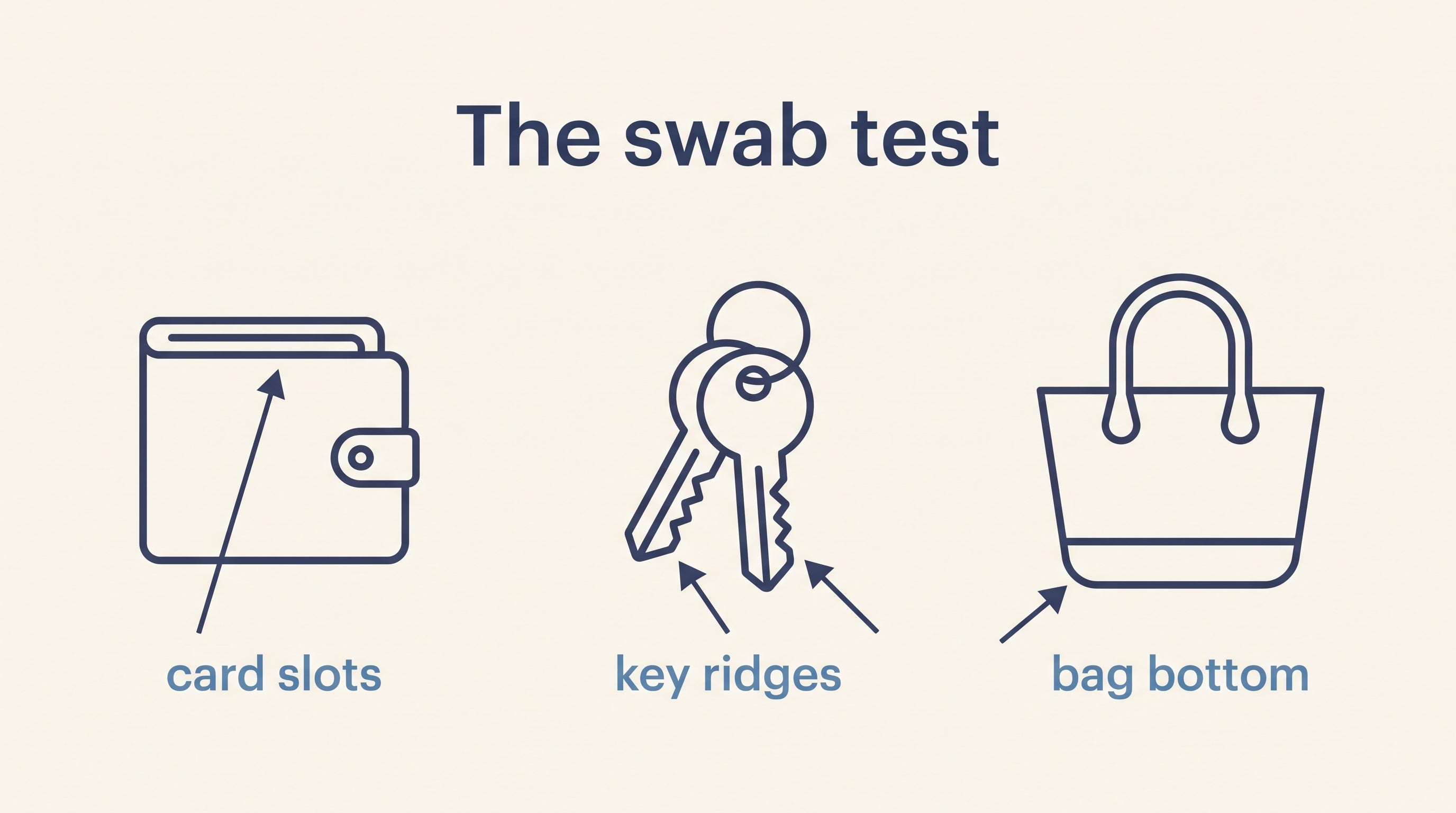
A key is mostly ridges and grooves. A wallet is card slots and folded seams. A handbag has zipper pulls, stitching, and a fabric bottom. A wipe slides over all of it without making contact with what is inside. That is when I started looking at UV-C, because it does not rely on pressure or physical contact. The light reaches the irregular surfaces a cloth cannot, and it does the job by damaging the DNA and RNA of microorganisms so they cannot reproduce.
That is how I ended up trying UVCeed, the small UV-C device that attaches to a phone. It turned the phone I already wipe into the tool for the places I could not reach. The camera shows the coverage as I go, so I can actually see what I have already cleaned instead of guessing. And the results are not vague marketing: independent testing recorded a 99.9 percent reduction of Staph aureus in 15 seconds, a 99.99 percent reduction of E. coli in 24 seconds, and a 99.9 percent reduction of SARS-CoV-2 in 32 seconds.
If your cleaning stops at what a wipe can touch, you are leaving the ridges and seams out. See how UVCeed reaches the spots a wipe misses.
The routine that finally stuck
I did not turn this into a daily chore. The guidance I found suggests wiping personal items like phones, wallets, and keys about once a week, and that is the cadence I kept. The routine is short enough that I actually do it.
Once a week I wipe the smooth surfaces. I keep my bag off the floor, especially in bathrooms, because that one habit removes the biggest source of contamination before it happens. Then I run the UVCeed over the crevices: the card slots, the key teeth, the zipper pulls, the seams. The camera overlay shows me the coverage in real time, so it stops feeling like a blind sweep and starts feeling like a checked box.
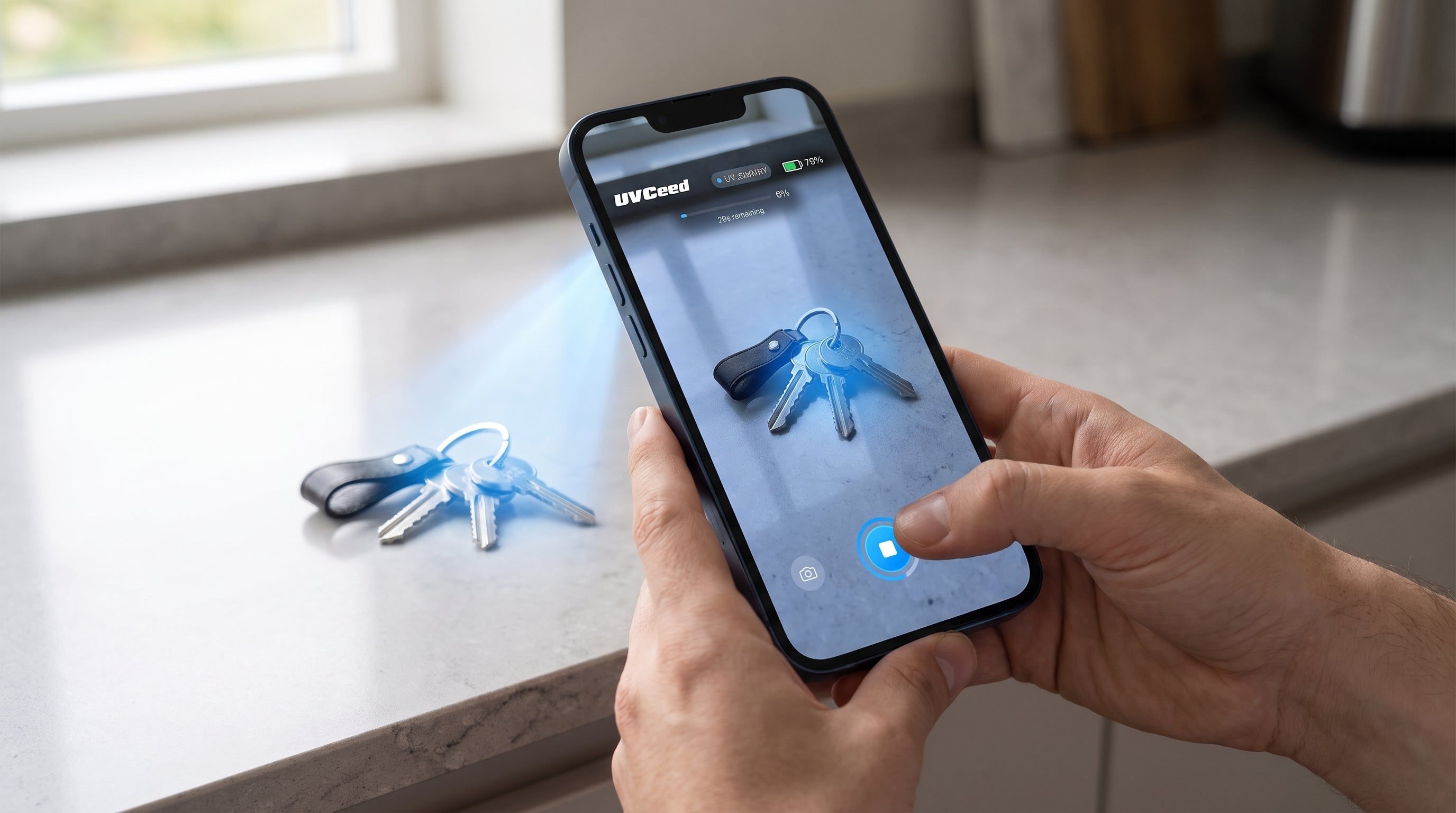
AI-generated illustration for visualization purposes. UV-C light is invisible to the human eye.
What changed, honestly
Nothing about my day looks dramatic. I still carry the same wallet and the same keys. I did not become the person who cleans everything that moves. What changed is smaller and more useful: the three objects I touch more than almost anything else are no longer the three objects I never clean.
It turns out the gap was not effort. I was already cleaning. The gap was attention. I was wiping the object with the obvious smudge and forgetting the two that never show one. Closing that gap took about two minutes a week, and it started with looking at my keys instead of past them.
If you carry a phone, the tool that closes the gap is probably already in your hand. Try UVCeed on the items you carry every day.
Want More Articles Like This?
Get research on UV-C treatment and product updates delivered to your inbox.


