


Your smartwatch or fitness tracker is the hardest-working item you wear. It counts steps, tracks sleep, nudges you to stand, and quietly logs a workout without being asked. It also spends all day pressed against your skin, through sweat, sunscreen, hand lotion, dishwater, and every doorknob and phone your hands touched before you strapped it back on. That combination makes the band one of the most overlooked surfaces you carry with you everywhere.
Part of the reason bands go uncleaned is that they look clean. A band can pick up dust, dead skin, and sweat residue without ever looking dirty, much like a phone screen can look spotless while carrying whatever your hands brought home. Most of us wipe down our phones and our desks more often than the band that never leaves our arm.
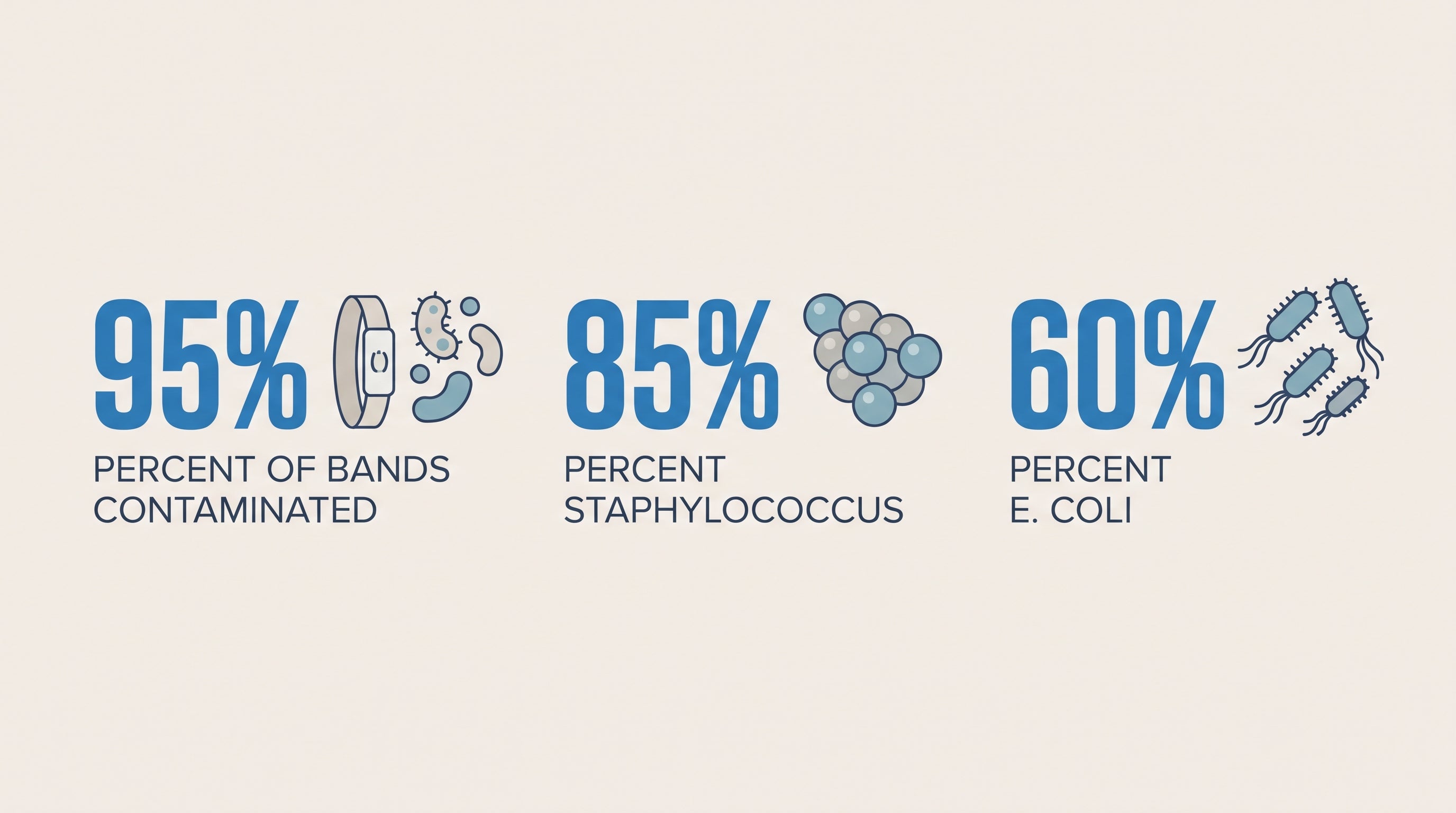
A 2023 study from Florida Atlantic University gives a concrete reason to rethink that habit. When researchers tested 20 smartwatch and fitness wristbands, 95 percent were contaminated with bacteria capable of causing disease.
What the research found on wristbands
The Florida Atlantic University team swabbed and tested wristbands for Staphylococcus, Enterobacteria such as E. coli, and Pseudomonas. Staphylococcus was detected on 85 percent of the bands, E. coli on 60 percent, and Pseudomonas on 30 percent. These are not exotic microbes. They are the same families you try to keep off your kitchen counters and away from your hands.
Most of the time, a healthy skin barrier keeps these organisms harmless. The study noted that they are the same bacteria behind common skin and soft tissue infections when they find an opening, such as a small cut or scrape near the edge of the band. A clean band simply gives them fewer chances.
Gym goers carried the highest staphylococcal counts, which makes sense. A band worn through a workout sits in heat, moisture, and friction for an hour, then stays on while you drive home and answer messages. The study also found that the material made a real difference, which is where cleaning gets interesting.
None of this means a wristband is dangerous to wear. It means the band is a surface, the same way a phone or a doorknob is a surface, and surfaces benefit from being cleaned now and then. The good news is that the fix is cheap and takes less than a minute once you have a routine.
Why the band material matters
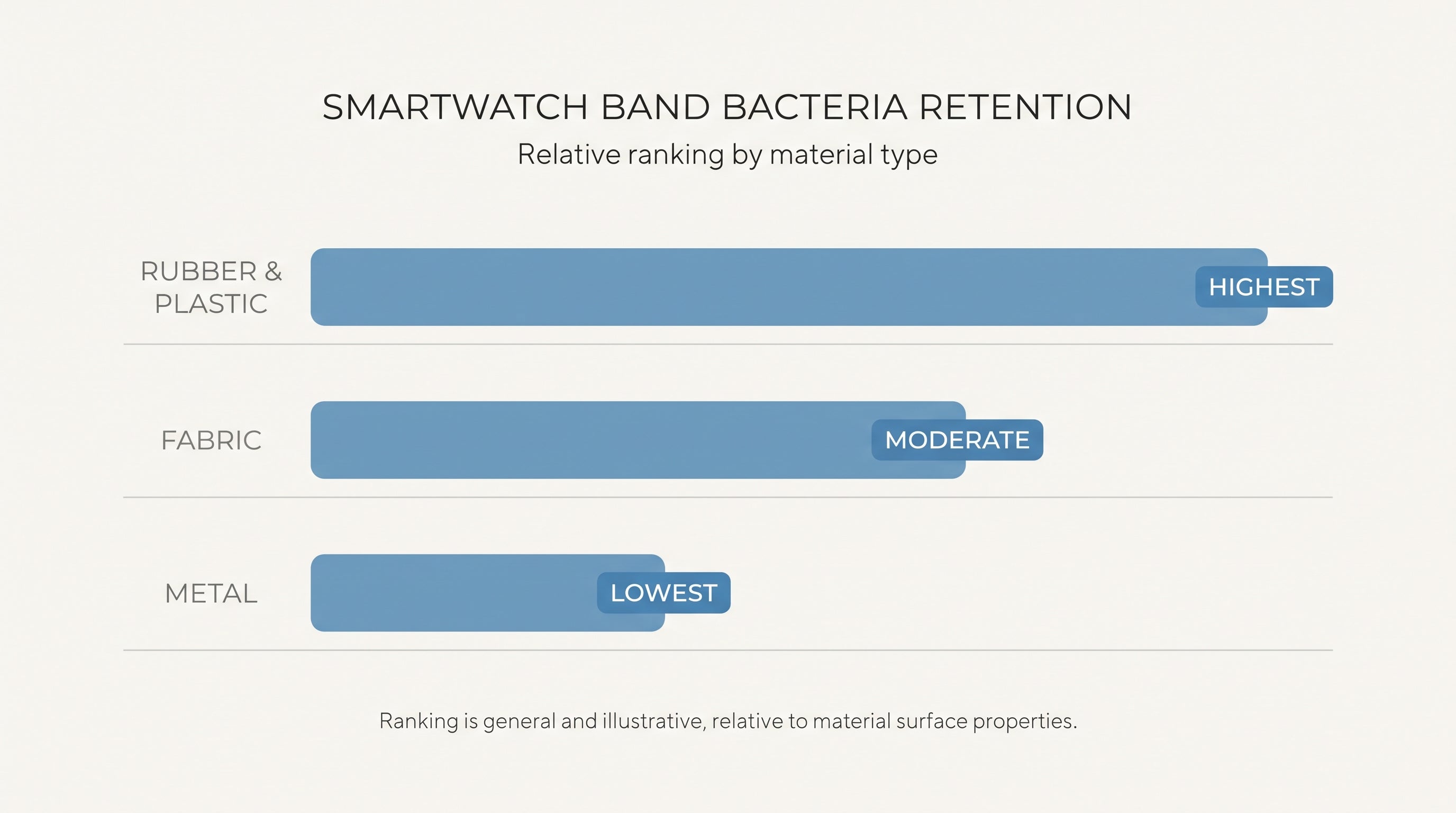
Rubber and plastic bands held the most bacteria in the study, while metal bands, especially gold and silver, were virtually free of it. Porous, slightly static surfaces give microbes more places to cling and more tiny crevices to hide in. A smooth metal link has fewer of those hiding spots.
That does not mean you should swap your silicone band for gold. It means the band you already wear rewards a routine matched to its material. Silicone, fabric, leather, and metal each clean differently, and using the wrong method can damage the band long before it gets clean.
How to clean each type of band
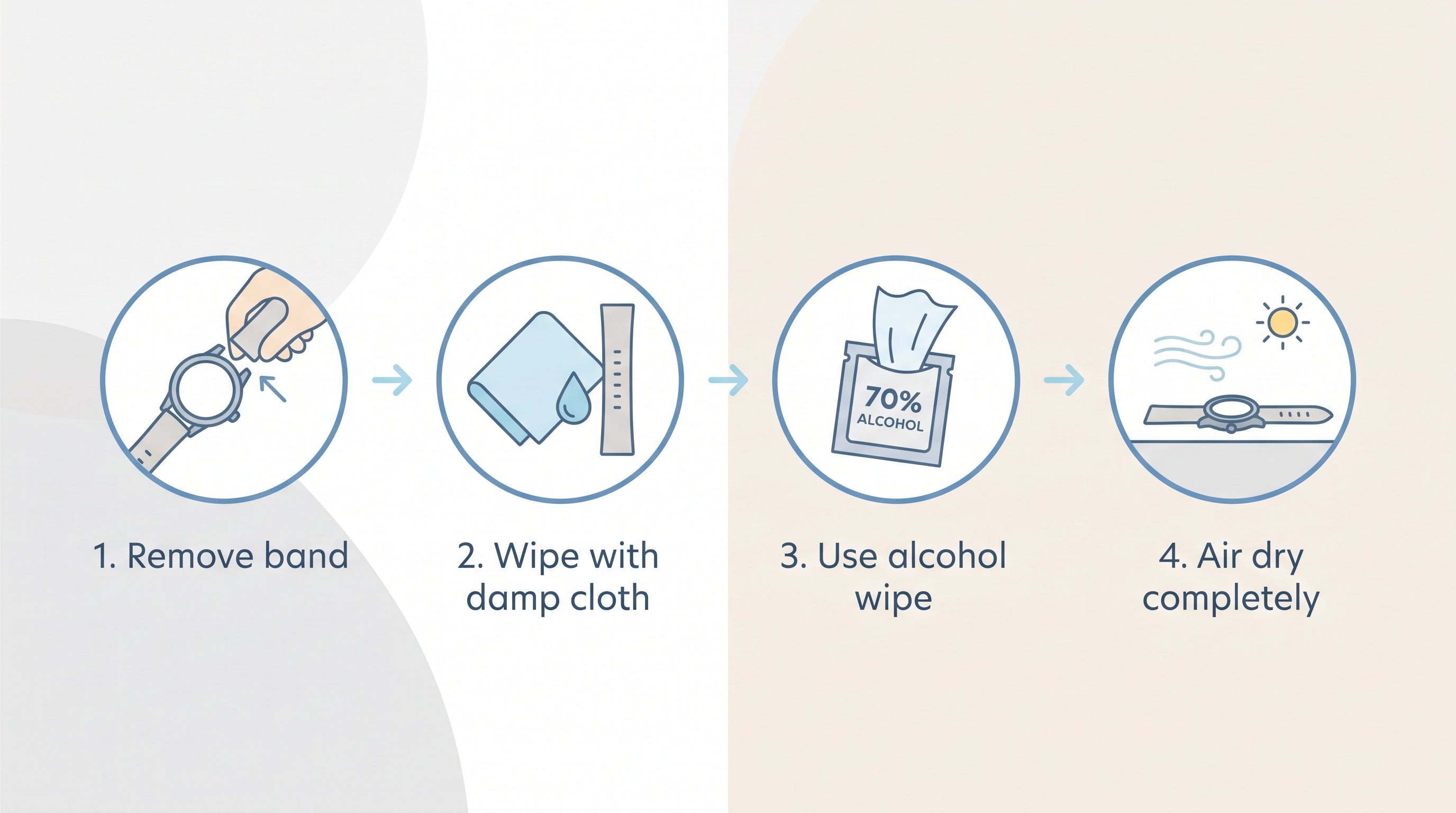
The basics are the same everywhere: remove the band from the watch, and turn the watch off and away from its charger. Apple's care guidance for wearables is a useful benchmark, and it starts with a plain, nonabrasive, lint-free cloth.
Silicone and fluoroelastomer
This is the easiest material to care for. Wipe it with a nonabrasive, lint-free cloth, lightly dampened with fresh water if needed. A mild hypoallergenic hand soap is fine for a deeper clean, followed by a clean-water rinse and a thorough dry. If the band has a textured underside or a hole pattern, work the cloth into those grooves, where sweat residue tends to settle.
Fabric and nylon
Fabric bands soak up sweat, which makes them comfortable and also makes them a good place for residue to build. Wipe them with a soft, nonabrasive cloth and dampen it only as much as needed to lift a stain. Do not soak them, and let them dry fully before wearing. Avoid bleach and hydrogen peroxide, which can weaken the fibers and the color.
Leather
Leather is the most delicate band material. It is not water resistant, so the rule is simple: wipe with a clean, dry or lightly dampened cloth and never soak it. Dry it away from direct sun, high heat, and humidity, and give it time to air out after a sweaty day before you strap it back on.
Metal
Metal bands are the easiest to keep low-germ, and they tolerate more. Wipe with a nonabrasive, lint-free cloth, lightly dampened if needed, and dry before reattaching. A 70 percent isopropyl alcohol wipe or 75 percent ethyl alcohol wipe is acceptable on metal and on most silicone sport bands, which makes it a useful tool for a periodic sanitizing pass. A quick wipe after a day of sunscreen or lotion is usually all a metal band needs.
One note on disinfecting wipes: alcohol and approved disinfectant wipes are safe for the watch exterior, metal, and most sport bands, but they should stay off fabric and leather. The Florida Atlantic University team also tested disinfectants and found that Lysol disinfectant spray and 70 percent ethanol killed 99.9 percent of bacteria on the bands within 30 seconds, while apple cider vinegar took noticeably longer.
How often should you actually clean it?
A good starting point is a quick wipe after every sweaty workout and a fuller cleaning once every week or two. If you sleep in your tracker or wear it through cooking, gardening, or pet care, lean toward the shorter end. A band that feels tacky, smells faintly of sweat after drying, or leaves a mark on your skin is past due. Treat the band the way you treat a phone case: if you would not skip it forever, do not skip it indefinitely.
Where UV-C fits in
Wiping reaches the flat surfaces you can see. It is less reliable in the holes, seams, and textured undersides where residue settles. Ultraviolet-C light works differently. UV-C is a wavelength of light in the germicidal range that damages the DNA and RNA of bacteria and viruses, which stops them from reproducing. Because it is light, it reaches into the same crevices a cloth passes over, and it needs no liquid. That is why it is used to disinfect air, water, and surfaces in hospitals and laboratories.
The catch with UV-C is coverage. It works on a line of sight, so a surface in shadow does not get the same dose. That is where feedback helps: if you can see that a spot has been covered, you know the light actually reached it.
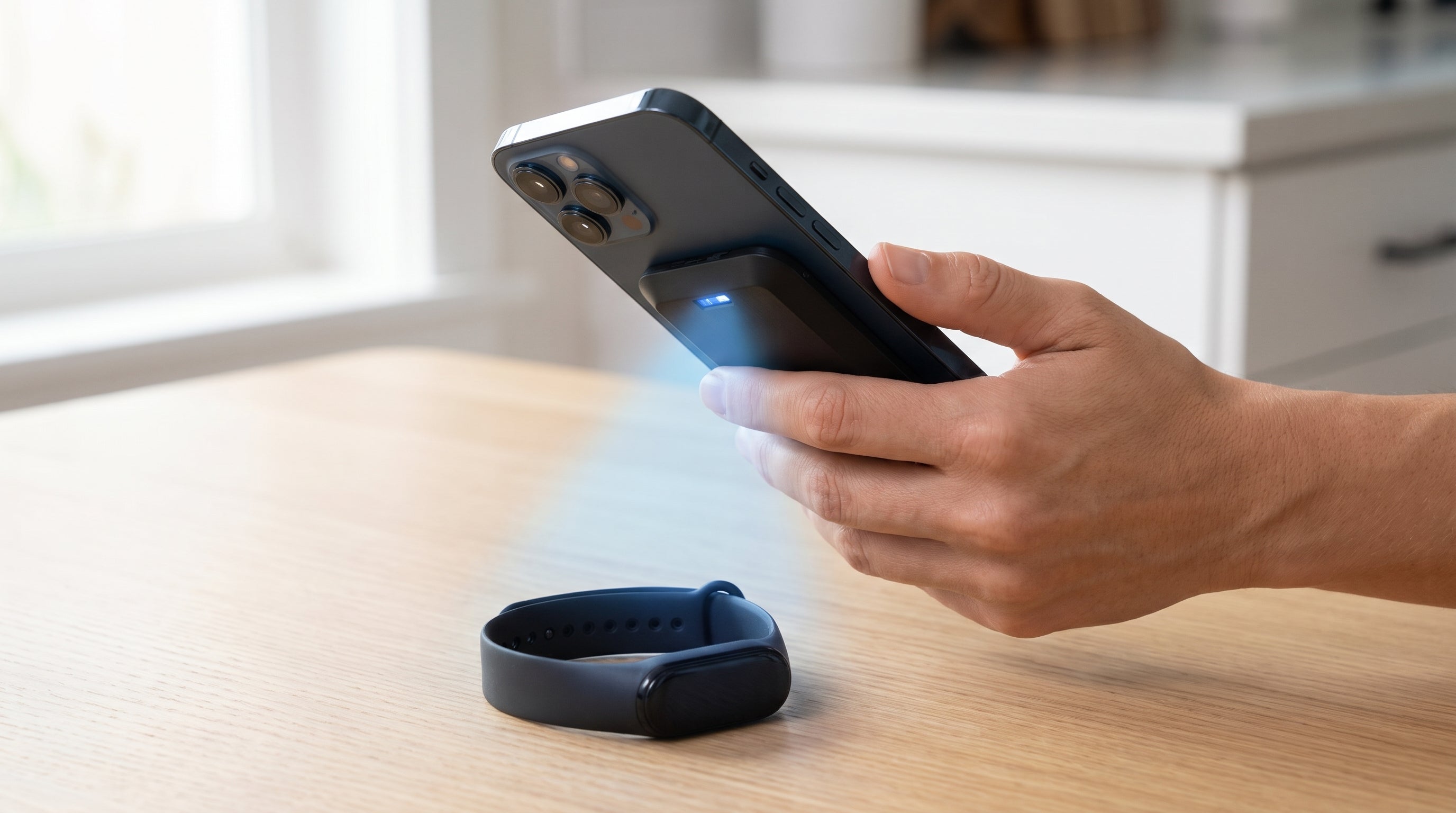
For a quick, chemical-free pass between washes that reaches the grooves a cloth skips, see the UVCeed disinfection device.
A simple weekly routine
You do not need a complicated system. Once a week, take the band off, wipe it down to match its material, dry it completely, and give the watch face a gentle pass with a lint-free cloth. After a hard workout or a day at the beach, do the same thing that evening. It takes less time than checking your messages, and it keeps the one thing you never take off from becoming the thing you never clean.
Want More Articles Like This?
Get research on UV-C treatment and product updates delivered to your inbox.


