


Most people assume the dirtiest surface in their home is the one they scrub hardest. In the kitchen, the opposite is usually true. The federal government estimates that about 48 million Americans, roughly one in six, get a foodborne illness each year, and many of those bugs pass through the very tools that are supposed to keep a kitchen clean. Three of them do the most hidden work: the sponge, the dish towel, and the cutting board. All three share the same problem. They stay wet, they collect food residue, and they rarely get the attention their actual workload deserves. The good news is that none of this is hard to fix. The better news is that a little understanding of how moisture and bacteria actually behave will get you further than an hour of aggressive scrubbing.
The sponge holds more bacteria than almost anything you own
A widely cited 2017 study published in Scientific Reports analyzed used kitchen sponges and found something that surprised even the authors. A single cubic centimeter of sponge tissue, about the size of a sugar cube, could hold up to 54 billion bacterial cells, a density the researchers compared to human stool. The bacteria were not sitting politely on the surface, either. Microscopy showed them packed into the sponge's internal cavities, sometimes in biofilm-like structures that are genuinely hard to rinse away.
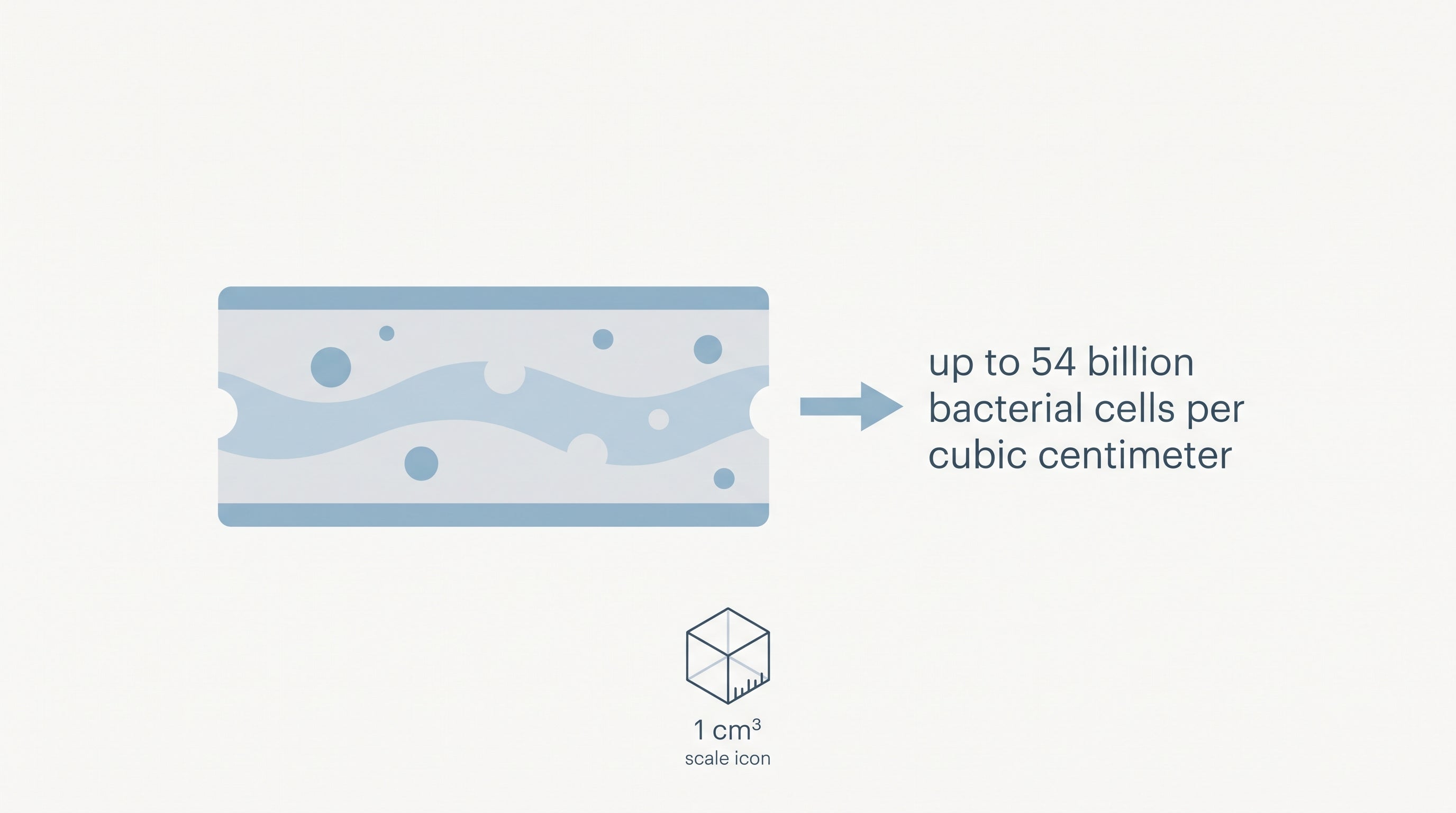
Why does a sponge get this bad? It is the perfect growth chamber. It is wet for most of the day, it sits at room temperature, and it is repeatedly loaded with food particles. Then it gets used to wipe down the counter, the sink, and the same board that held raw chicken, which means whatever it picks up in one place gets smeared toward the next. The study looked at what regular sanitizing did to all of this, and the result is the part most people find surprising. Sponges that owners routinely microwaved or boiled did not come out cleaner in the ways that matter. Two potentially pathogenic groups, Chryseobacterium hominis and Moraxella osloensis, actually showed up in greater proportions in sponges that had been regularly sanitized. The likely explanation is simple: a hard cleaning knocks back the crowd, and the surviving bacteria move back into the newly freed space. The authors' practical advice was blunt. Replace the sponge regularly, about once a week, rather than trying to make the same one last forever.
The dish towel gets wet, gets reused, and gets forgotten
A 2018 study presented at the American Society for Microbiology meeting looked at 100 kitchen towels collected after about a month of use. Nearly half, 49 percent, showed bacterial growth. Among the towels that grew something, 36.7 percent grew coliform bacteria, a group that includes E. coli, and 14.3 percent grew Staphylococcus aureus, an organism tied to both food poisoning and skin infections. E. coli turned up most often on towels from households that cooked with meat, which points to cross-contamination more than anything else.
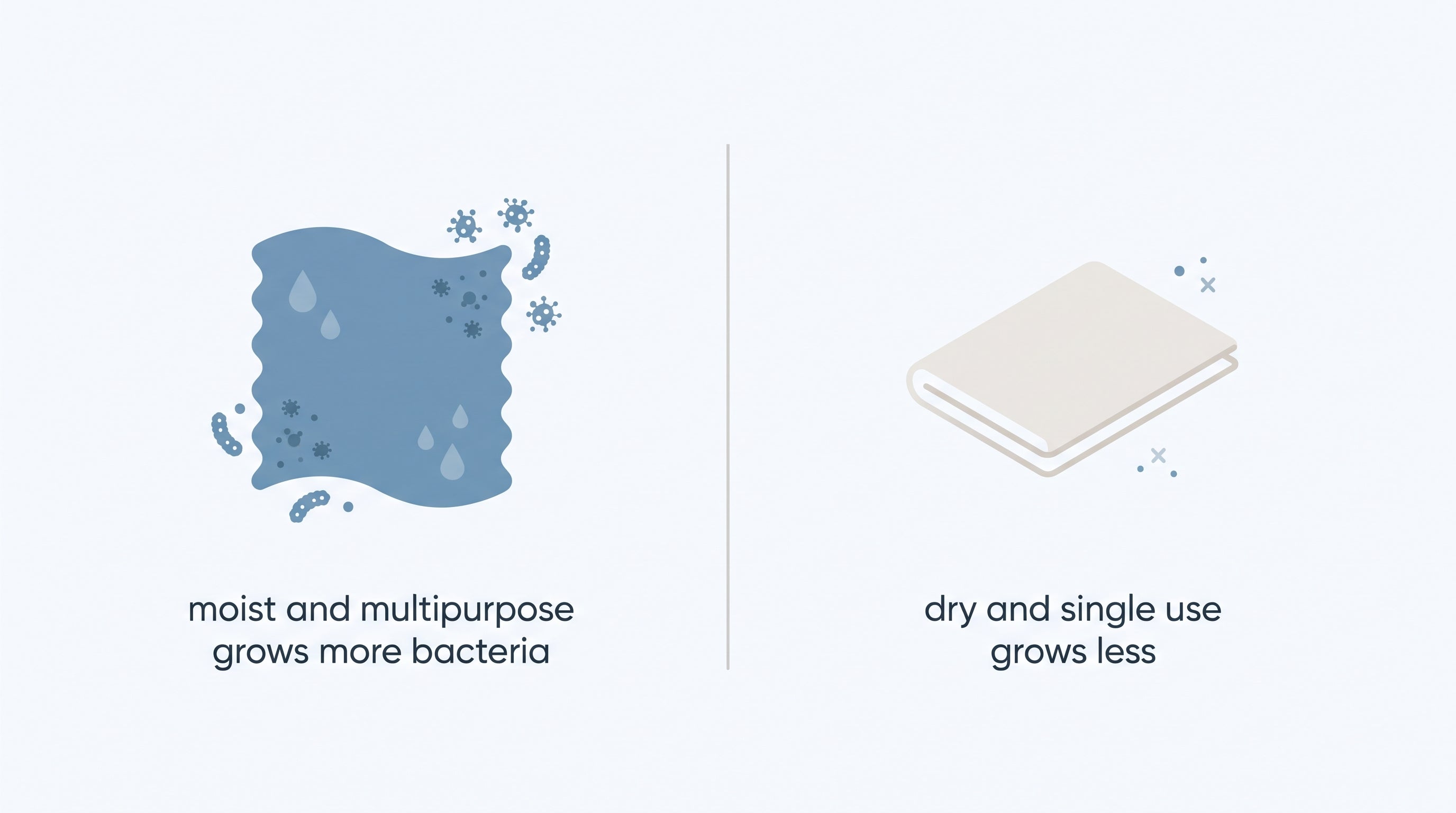
The pattern the researchers flagged is the most useful part. Moist towels grew more bacteria than dry ones, and multipurpose towels, the ones used to wipe a counter, dry hands, and grab a hot pan in the same afternoon, grew more than single-purpose towels. That combination of damp plus overworked is exactly how most kitchens use a towel. It hangs on the oven handle, it dries a few dishes, it wipes a small spill, and by evening it has been damp for hours. The fix is refreshingly low-tech: let towels dry fully between uses, keep one towel per job, and wash them often. The researchers suggested washing every other day for busy households, especially those with children or a lot of meat cooking. If you can drape a towel flat on a rack instead of bunching it on a hook, even better, because drying is the part that actually matters.
The cutting board is where raw and ready-to-eat meet
A cutting board has one job a sponge and a towel do not. It receives raw meat, poultry, or seafood, and then, minutes later, the produce you will eat without cooking. That handoff is the textbook definition of cross-contamination, and it is why the FDA's advice on boards is so specific. Use one board for raw meat, poultry, and seafood and a second for produce. If you only have one, prepare the produce first and set it aside, wash the board with hot, soapy water, then move on to the raw items and wash it again afterward. The same logic applies to plates and marinades: cooked food goes on a clean plate, not the one that held raw meat, and a marinade that touched raw meat should be boiled before it touches anything cooked.
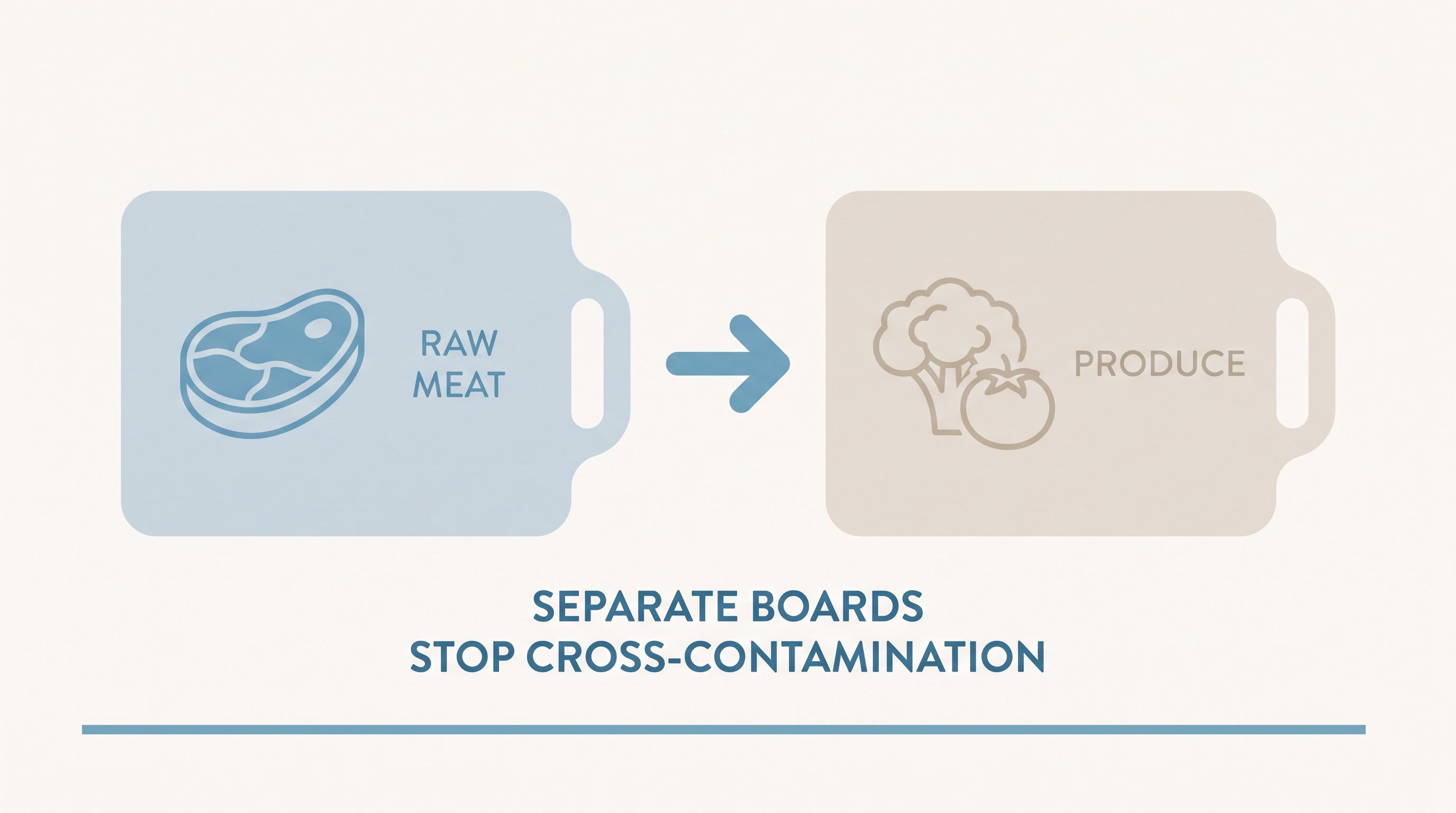
The second piece of advice is the one most people skip. Replace a board when it becomes deeply grooved. Every knife cut leaves a microscopic channel, and those channels are exactly where moisture and food particles settle beyond the reach of a sponge. A board with deep grooves is not a dirty board that needs more effort. It is a worn-out tool that needs retirement. That is also why nonporous boards are generally easier to keep clean than wood, even though both work fine if you follow the two-board rule and replace them when they scar. The board is not the enemy. The groove is the enemy, because it is the one place a wipe cannot reach.
If keeping those hard kitchen surfaces clean between washes feels like a lot to remember, a portable UV-C pass on the surfaces you touch most is a simple place to start: https://uvceed.com/products/the-uvceed-disinfection-device.
Where UV-C actually fits in a kitchen
UV-C light works by a specific mechanism. When light in the germicidal range lands on a microorganism, it damages the organism's DNA and RNA, which keeps bacteria and viruses from reproducing. But UV-C has one hard rule: it only affects the surface it can directly see. The FDA describes this as a line-of-sight requirement, and it matters in a kitchen more than almost anywhere else. A wet, porous sponge is the worst possible target for UV-C, because the light cannot reach into the internal cavities where most of the bacteria live. The hard, smooth surfaces around it are the good targets. That is why a light-based device makes sense as a supplement to washing rather than a substitute for it.
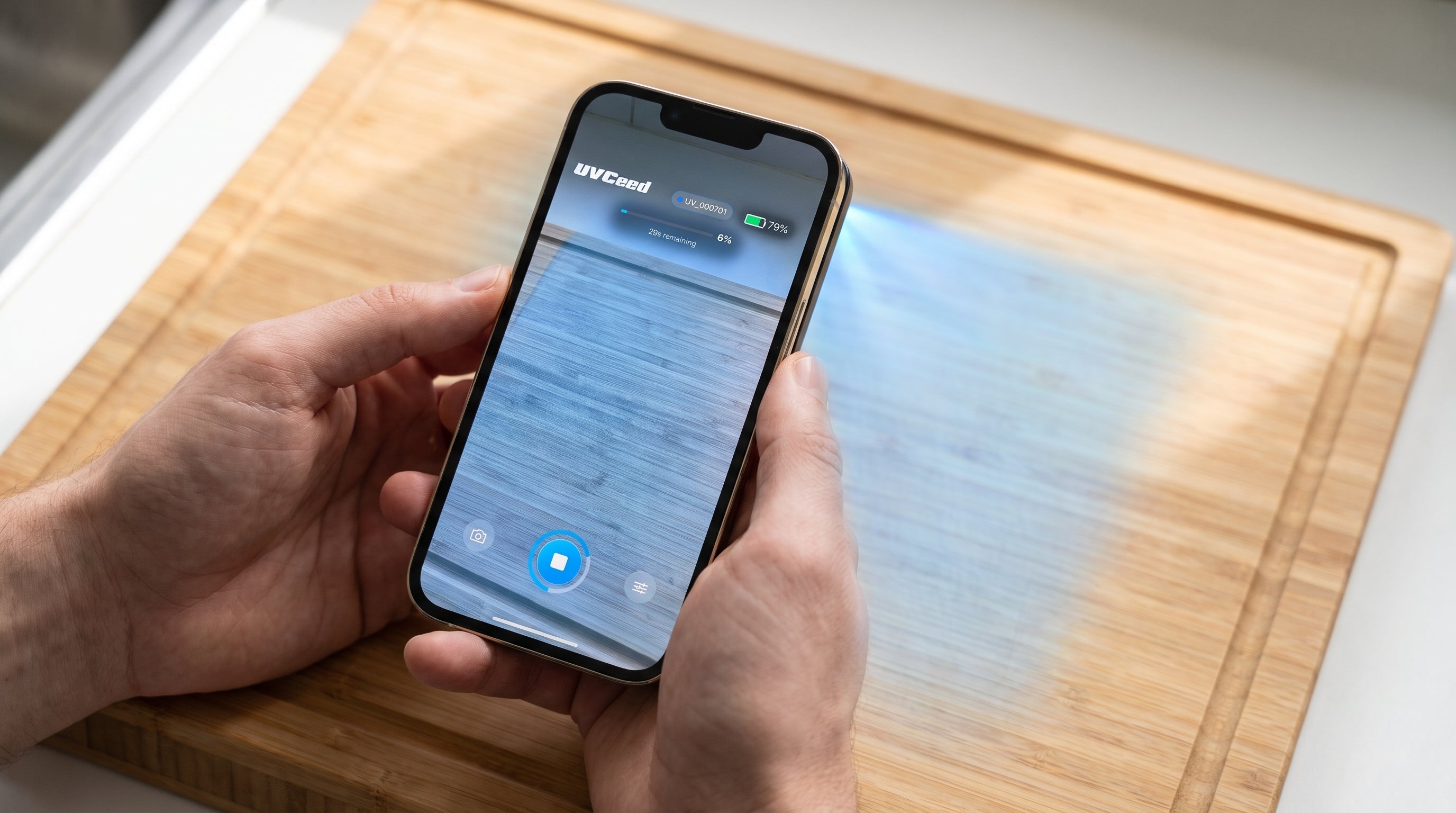
In UVCeed's published lab testing, the device reduced Staphylococcus aureus by 99.9 percent in 15 seconds, E. coli by 99.99 percent in 24 seconds, and SARS-CoV-2 by 99.9 percent in 32 seconds. Those numbers describe clean, directly exposed surfaces, which is exactly how a device like this should be used in a kitchen. It earns its keep on the items that stay dry and get touched constantly: the cutting board surface after it has been washed and dried, the faucet handle, the sink rim, knife handles, the refrigerator door, and the phone you check a recipe on while your hands are covered in whatever you are cooking. Because the app shows coverage on screen as you go, you can see the surface you have already treated instead of guessing whether you got the whole handle or just the front of it.
A light-based pass fits neatly into that list of hard, dry, high-touch kitchen surfaces, and the coverage view removes the guesswork: https://uvceed.com/products/the-uvceed-disinfection-device.
A five-minute weekly reset
None of this requires a chemistry degree or a weekend deep clean. The whole routine fits into about five minutes at the end of the week. Replace the sponge, or at minimum set a reminder to swap it weekly. Hang the dish towel so it can actually dry, give it one job instead of three, and wash it every other day. Keep two cutting boards and retire the grooved one. Then take one light-based pass over the hard surfaces you touch most, the board, the handles, the sink rim, and the phone, so the things that stay wet are cycled out and the things that stay dry are covered. That is the whole trick: do not try to make a wet, porous sponge last forever, and do not let the dry, hard surfaces go unaddressed between washes.
The goal is not a sterile kitchen. That is neither possible nor necessary. The goal is to stop treating the three busiest tools in the room like an afterthought, because they are the ones doing the most invisible work between meals. Handle the wet things by cycling them out, handle the dry things with a quick pass, and the kitchen becomes a much calmer place to cook.
Want More Articles Like This?
Get research on UV-C treatment and product updates delivered to your inbox.


